get your buzz on...

events and tastings
food and wine pairing ideas
and the latest news from Mission Wines

Go to Mission Wines Online Store

Thursday, August 20, 2015

Farmers' Market Wine Challenge: Padron Peppers

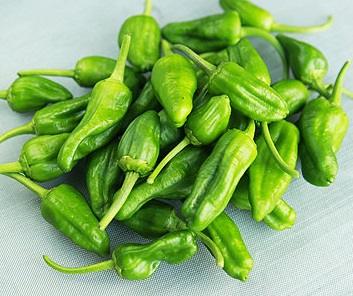
I first encountered the pimiento de padron (padron pepper) during my eight month stay in Spain in 2003 while visiting dear friends in Gallicia, the northwestermost province of Spain where the pepper originates. Here, the local Gallegos serve it typically as a simple tapa, fried in olive oil and sprinkled with coarse salt. While most of these delicious little green peppers are mild, about one in ten can be very, very, bring-tears-to-your-eyes spicy, hence the name "padron" which means "godfather" in Spanish, a reference to the one spicy one as "the godfather" of the batch. The spiciness of the pepper is influenced by different variables, including the amount of rain and sun it received while growing.


The local opinions differ on how to determine which are spicy and which are not--along with other lore related to what is means if you're the one that gets the hot one (Gallegos are very superstitious)--but I have yet to confirm a reliable technique for pre-determining spiciness.  A similar variety of this pepper, the shisito, is cultivated in East Asia and looks and behaves the same. Both are in season now, and both make a delicious and exciting addition to your summer table. I will say that out of all the jalapenos and serranos and other spicy American peppers I've eaten as a native Californian raised on Mexican food, one of the spiciest I've ever had by far was a padron, so be forewarned! 

Whether you've grabbed a bag of padron peppers or shisitos from the market to prepare tonight or soon, you don't need to do much: just sautee over high heat, sprinkle with salt and voila! It will take more effort to choose the wine, since there are certain factors to consider when pairing wine with green peppers that may deliver quite a bit of heat. A succulent, fruity wine with body to balance this pepper's sweetly herbal flavor and potential for spice is best.

A wine pairing rule of thumb I endorse is this: if the ingredient comes from a place with an ancient wine tradition, look to the region for guidance on the wine pairing. In cool-climate Gallicia, white wine is king, and many traditional options will suit a dish of padron peppers well, cooling and refreshing the palate between bites. Look for varietals like Albarino or Godello or white blends from this part of Spain. I'd avoid red wine altogether, but if you desire a red, choose a light, fruity red with moderate to low tannin, like reds made from the Gallician Mencia grape, or a French Gamay. Other international white varieties, like a fruity Sauvignon Blanc, dry to off-dry Riesling or Chenin Blanc should do the trick. And don't forget the many white varietals and blends from nearby Portugual, which borders Galicia to the south. You can't go wrong with the slightly effervescent, off-dry whites from Vinho Verde with this dish, especially if you're eating and drinking during the day. Generally lower in alcohol, a classic Vinho Verde is a must for daytime entertaining!

My top choice for pairing with a plate of padron or shisito peppers right now does in fact hail from Vinho Verde, but is a step up in quality and complexity than your standard porch-pounder. Quinto da Raza  is located in the Vinho Verde appellation and produces several wines including your traditional, fizzy Vinho Verde which I adore, but I am even more enamored of their single vineyard, single varietal, Dom Diogo Arinto. Classified as Vinho Verde, this is unlike any Vinho Verde I've ever. Round and succulent, this has barely a whisper of effervescence--it's basically still, if you ask me--with juicy melon and citrus aromas and flavors. Contrary to the current trend, this not a super dry, racy white, which I appreciate in the context of heat. Still, it possesses the perfect balance of minerality and acidity to keep its ripe fruit in check and is great match not only for these piquant peppers, but a whole range of foods, from shellfish to chorizo. It is sure is delicious on its own, too.

I recently served this wine with a plate of padron peppers on a very hot evening that followed a very hot day in Pasadena, and it paired magically, especially with the spicy ones! Soon thereafter, I ordered a plate of shisitos at trendy Redbird in DTLA, and while the skin contact Slovenian white I chose sufficed, I sure wish I had this little Arinto instead. Highly recommended!

Cheers,

-Chiara Shannon 

In stock now: 
100% Arinto. Located inland in the verdant Vinho Verde region, Quinta da Raza is the home and life of Jose Diogo and Mafalda Teixeira Coelho. Quinta da Raza has a unique terroir created by the gentle slopes and magnificent exposure to the sun. The soil benefits from its granite origins with areas of schist and clay. It has a microclimate created by the mountains in the west and the valley of the Tamega river which prevents the influence of the Atlantic winds. The valley creates a shelter resulting in less rain and a greater temperature range. The vineyards are subject to more sun than perhaps other vineyards in the Vinho Verde Region, which are important factors for the development of the vines. Moreover, the average altitude of Quinta da Raza is 820 feet, which corresponds to the best average altitude suited for growing grapes. In 1999 / 2000, significant improvements were introduced in the cellar, including new oenological and storage equipment. Incidentally, the bird which appears on the Raza label is the Lesser Kestrel, locally called "Peneireiro“. (Importer)


Thursday, August 13, 2015

Farmers' Market Wine Challenge: Eggplant

It's eggplant time! Also known as aubergine for it's purple skin, the eggplant turns up in the cuisine of many cultures, from Indonesia to the Mediterranean, and it's certainly suited to the climate of California! A member of the nightshade family, along with the potato and tomato, the eggplant's deep purple hue adds an attractive color contrast to the reds, yellows and greens of other ingredients in dishes. The skin and the flesh can be quite bitter,  however, making it both bane and blessing at the table. Chefs have many tips for dealing with the  bitterness of eggplant, but nevertheless eggplant remains a polarizing food: folks either love it or they hate it. I happen to love it--grilled in a Mediterranean-inspired eggplant salad, roasted and pureed in a variety of spreads and dips (baba ganoush, anyone?) or braised and served alongside a hearty protein like beef or lamb.

Eggplant's distinct flavor and texture present an opportunity for some delicious wine pairing, as long as you steer clear of tannic reds and oaked whites, which will amplify bitter flavors. Still, a  wine with ample structural components is needed to match eggplant's richness. This bodes well for red wine, but I'd keep it on the fruitier side. Mediterranean varietals and blends like Barbera or Dolcetto from Italy and Grenache and Rhone varietal blends from France and Spain, as well as California's Zinfandel come to mind as tasty options to consider.

Asian-inspired dishes with eggplant may include both spicy and sweet ingredients and be seasoned with exotic spices, which changes our wine pairing course. For a dish with heat, I'd avoid any wine that is too dry or high in alcohol; alcohol amplifies the sensation of heat in the mouth. Dry wines taste bitter against fare with sweeter ingredients, and with eggplant is involved we definitely don't want that! A perfumed, fruity white with fresh acidity (and even a little sweetness, depending on the heat of the dish) would be best here. A dry or off-dry Chenin Blanc from France, a fleshy Vermentino or other medium-bodied white from Italy, or a ripe Sauvignon Blanc from California are several options to consider.

http://shop.missionwines.com/Store/pc/2011-DOMAINE-ZAFEIRAKIS-LIMNIONA-47p3111.htm
For the Mediterranean-inspired grilled eggplant salad I'll be enjoying soon, which includes your usual suspects of garlic, olive oil and vinegar, fresh garlic, green herbs, black pepper and capers, I'm going Greek. Located in Tyrnavos, Greece, Domaine Zafeirakis produces a seductive, perfumed red from the rare indigenous variety Limniona that has all the qualities I'm seeking to match this particular dish: lifted aromatics, soft red fruit, elegant structure and the length on the finish. The red fruit and floral aromatics will play well with the ingredients of the dish, and there's enough acidity to counter the vinegar. The Zafeirakis family has been in the Greek wine business for over a century, but the winery is a new enterprise, founded in 2012 by fourth-generation Christos Zafeirakis, who studied Oenology in Piedmont, Italy. The revitalization of the native varieties otherwise headed for extinction like Limniona is a focus at the domaine, an effort I strongly support. I've been very impressed by what I've tasted so far from this producer--they also make a lovely aromatic white from the Malagousia variety--and I highly recommend the wines.

-Chiara Shannon

In stock now at Mission Wines: 
100% Limniona. "The thick-skinned Limniona grape has become Christos’ signature wine in just its second vintage. It is a silky, sinewy wine without an ounce of fat on it, but with an indescribably mysterious nose, strangely evocative of oriental spices. Aged, interestingly, in Austrian oak barrels (more neutral than French, and beloved by the likes of Willi Bründlmayer), it bears more than a passing resemblance to good Trousseau. A true original and a wine of high class." (Producer) 


Thursday, August 6, 2015

Farmer's Market Wine Challenge: Green Beans


Green beans and their longer, thinner French cousin known as French beans or haricot verts are in peak season in California right now. The best quality beans are carefully harvested by hand and can be found at your local farmers' market. These versatile and healthy legumes are delicious cooked and served warm or cold, fresh or seasoned. You can prepare them simply, cooked and served chilled in a salad, or piping hot with a little lemon and garlic (also in season!). They can be braised, added to stews and soups, or--my favorite--hot-and-spicy Szechuan-style with ginger and hot chilis.

Many factors contribute to which wines will best complement your meal. Austria's most popular white variety, Gruner Veltliner, is an excellent option for green bean salads and basic sides served with fish, poultry and white meats. This varietal has an inherent green fruit quality to its aromatics and complements green vegetables very nicely. It is crisp like Sauvignon Blanc but has the body of Chardonnay, making it a balanced and refreshing that will match a broad ranch of foods. Look for a classic Gruner in a liter-sized container, like the Berger Gruner Veltliner ($15.99). Many of these tasty values are either bottled with a stelvin closure (screwcap) or in this case, the ultra-easy, picnic-ready bottle cap! 

Green beans make a healthy addition (or alternative to) french fries or potatoes served with red meat, in which case a red wine would be perfectly appropriate. For a simple steak with haricot verts, I recommend old school Bordeaux, or, for something lighter, a nice Cabernet Franc from the Loire Valley.

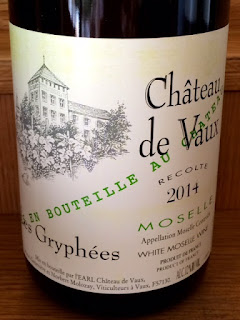
http://shop.missionwines.com/Store/pc/2014-CHATEAU-DE-VAUX-LES-GRYPHEES-MOSELLE-BLANC-6p3373.htm#details
When you're amping up the flavor and heat with an Asian-style recipe, an aromatic white with body and a richness balanced by acidity (a little sweetness is ok!) is my preference. You can go Riesling, Pinot Gris, or Gewurztraminer...or why not all three and then some? Brand new to Mission Wines is this enchanting white from the miniscule French appellation Moselle, which neighbors Alsace, Chateau De Vaux "Les Gryphees" Moselle Blanc. A blend of 30% Auxerrois, 30% Muller Thurgau (a crossing of Riesling and Chasselas), 30% Tokay Pinot Gris and 10% Gewurztraminer, this lovely white offers an intoxicating floral nose, succulent peach and tropical fruit flavors, but finishes clean and dry. It's the perfect white for the spicier flavors of summer. 

-Chiara Shannon

In stock now: 


"Norbert Molozay is a true pioneer in French winemaking who has nearly single-handedly resuscitated France’s most northerly appellation, Moselle. This tiny VDQS (just 100 acres) is tucked up in the northeast corner of France, just over the Vosges Mountains from Alsace, near the Luxembourg border. Although an important wine region up to the mid-nineteenth century, phylloxera, industrialization and two world wars brought near obliteration of viticulture around Metz, in Lorraine, whose production was sold to make champagne until 1910, when the A.O.C. Champagne was created...Les Gryphées shows notes of peaches and white flowers on the nose, followed through the palate with ripe fruit which is both rich, delicate and complex, revealing peaches and banana. Molozay suggests pairing this delightful wine with tagliatelle and mussels, sea scallops or a roasted free-range chicken with lemongrass. Indeed the Germanic resonances of this cuvée marry extremely well with exotic seasonings." (Importer)


Thursday, July 30, 2015

Farmers' Market Wine Challenge: Plums + Bubbles

My pairing for this week's Farmers' Market wine challenge is inspired by a delicious plum salad I recently enjoyed at one of my new favorite neighborhood spots, All' Acqua in Atwater Village. It was a simple preparation of fresh burrata cheese, watercress crushed pistachio and small slices of purple-skinned plum (maybe the LaRoda variety?) drizzled with aged balsamic vinegar. The sweet-tart punch of the plum complemented the delicate creaminess of the cheese while the supporting ingredients provided the perfect arrangement of contrasting flavors and textures for a truly harmonious dish. It was one of those dishes that was so good (not to mention so apparently uncomplicated!) that it has already been added to my summer entertaining repertoire!

As with most fruit and wine pairings, the inherent sweetness in fruit bumps us up against the one rule in food and wine pairing: ideally your wine should be sweeter than the dish. Aged balsamic vinegar adds more sugar and acidity to the dish, so you want to avoid tannic reds and whites, which will taste astringent. Additionally, a very light and low acid wine will fall flat. You want a wine with some body and acidity to balance the the vinegar, but not too strong or high in alcohol as to overwhelm the more delicate flavors and textures of the fruit and other components of the dish. In fact, a little sweetness in your wine here would be a good thing, if you are open to that. 

http://shop.missionwines.com/Store/pc/LATITUDE-50-N-SEKT-EXTRA-TROCKEN-ROSE-10p2351.htm
In this summer heat, I like my wine to refresh the palate, so something served chilled is my preference. Many sparkling wines offer moderate to high acidity while delivering body and texture without tannin and can be superb complements to a dish like this; I recommend a rose champagne or other methode champenoise sparkler with body and complexity like the NV Latitude 50N Sekt Rose Trocken ($15.99). I'm not one to say no to real Champagne, but it is expensive and there are many wonderful and more affordable options available from other regions in France and elsewhere in the world. This naturally made, bottle-fermented pink sparkler hails from Germany and is a blend of German varieties Dornfelder, Portuguieser, and Pinot Noir. It offers a delicious balance of flavor and texture with subtle fruit and spice accents--perfect for not only a fresh plum and burrata salad, but a wide variety of summer fruit dishes. Cheers!

-Chiara 

In stock now:
This crisp, dry sparkling wine from Germany is an under-the-radar gem. The palest pink in hue, it mimics Champagne with its fine bead and smoky minerality. A blend of Pinot Noir, Dornfelder and Portuguieser from mostly slate, limestone and porphyry soils, this gets its sparkle from secondary fermentation in bottle--just like Champagne--but it's priced to party!


Thursday, July 23, 2015

Farmers Market Wine Challenge: TOMATOES!

They say there are only two things that money can't buy: true love and home grown tomatoes. Whether you agree with that or not, the season has arrived for summer's most versatile fruit. I personally love seeing the tomatoes piling high in a rainbow of colors and varieties at my local shop and farmers market!

There are countless was to enjoy fresh tomatoes. Its sweet/savory flavor, aciditic tang and toothsome texture adds pop to salads and sandwiches and brings textural harmony to soups, stews and sauces. It can deliver heat, diced fresh in spicy salsas, but is instantly cooling as a chilled puree. While few would dispute that money can't buy the very best varieties--those lovingly nurtured from seed and hand-picked at peak ripeness from one's own garden (before the squirrels or other pests get to them!)--money fortunately can buy the perfect wines to complement your heirloom dishes, and you don't have to break the bank.

The same properties that make the tomato such a friendly ingredient in the kitchen can also make it a food-and-wine pairing foe. Prepared fresh, the tomato's sweetness and acidity can do battle with especially dry reds and most whites, increasing the sensation of astringency--not pleasant. Rich, tannic reds can also dominate the delicate texture and flavor of the tomato and other fresh ingredients, leaving the palate with nothing fun to appreciate from the plate. Cooked tomatoes in sauces, stews and braises can stand up to more structured reds, but you still want to watch the weight of the wine, especially if the dish is vegetarian.

Fruity roses with body like those from the Southern Rhone in France, the Bandol region of Provence and the surrounding environs in the Languedoc-Roussillon are great choices for both cold and cooked tomato dishes. Look for something with a deeper hue of pink, with can signify a fuller body and more intense flavor. I'd  save the palest, most delicate roses for your chilled tomato soups light salads, and opt for richer roses with complexity for your tomato-based sauces, pastas and other stews like the Provencal classic, ratatouille. A rose with full flavor and a little bit of sweetness, as is traditionally produced in the Cotes Catalanes of France and farther south in Spain, can be wondrously sweet and refreshing in the summer heat. Pair it with your all-American thick-cut tomato sandwich, classic Italian insalata caprese (fresh tomato and mozzarella cheese salad drizzled with olive oil, balsamic vinegar and fresh basil), and any number of salsas and tapenades. 


2013 Joan d'Anguerra "Alta Roses" ($17.99)
When it comes to red wine, I recommend a light-to-medium bodied red with juicy fruit, mild tannin, and balanced acidity with your tomato dishes. Sangiovese-based reds are great with cooked tomato dishes, sauces, and braises, but Sangiovese's natural high acidity and tannin can be too harsh for fresher tomato preparations. Instead I look toward the Spanish Mediterranean coast for my vinous inspiration. In the foothills Montsant, just outside Barcelona in the Catalan province of Tarragona, not far from the village of Bunol where the famous "La Tomatina" festival is held annually, red wines made from the Grenache variety offer that perfect balance of juicy fruit and savory complexity perfect for fresh tomato dishes. I can't get enough of the naturally made 2013 Joan d'Anguerra "Alta Roses Montsant, made from biodynamically farmed Grenache. Bright and juicy, this red wine has the optimum ripeness, structure and complexity to sing alongside a variety of tomato dishes, especially the classic Spanish pan con tomate y anchoa, bread smeared with fresh tomato, anchovies, garlic and olive oil. Delish!

In stock now and ready for your table:


2013 JOAN D'ANGUERA "ALTAROSES" MONTSANT ($17.99)   

100% Grenache from Montsant in the Catalan province of Spain. Organic and Biodynamic. The Altaroses is Joan d'Anguera's first certified biodynamic and organic wine. The Anguera brothers have decided to label the wine as a “Granatxa,” the old Catalan name for Garnacha, as an emblem of their focus on adhering to the lighter, traditional style of wines that used to be made in Montsant. Alcoholic and malolactic fermentation in concrete vats using indigenous yeasts. Aged for 12 months in old oak barrels. Naturally cold stabilized by winter’s chill and bottled unfined and unfiltered. Tasting Notes: Fresh wild strawberries, garrigue and warm spices on the nose. Very expressive. Medium weight, with mouth-watering acidity and soft warm fruit. Soft tannins and well-balanced structure between acidity, tannin, fruit and alcohol make this extremely gulp-able. (Importer)

-Chiara

Thursday, July 16, 2015

Farmer's Market Wine Challenge: It's Reining Melons!


From Ambrosia and Goddess to Canary and Cantaloupe, California melons are at their peak right now, rolling in and out of farmers' markets everywhere across LA. It is hard to resist the intoxicating smell of ripe melon, just begging you to take it home. Fresh melon is delicious on its own and makes a juicy addition to summer appetizer and salads. Whether you prepare it Italian style, sliced with smoked prosciutto, chopped with jicama in a refreshing Mexican salad, or my favorite, melon and cucumber salad with yogurt and mint, melon lends a juicy texture and cool sweetness to dishes as it balances savory, spicy, and herbal flavors. 

2014 Rein Riesling - In stock now at Mission Wines!
The sweetness of melon can present a challenge for wine pairing, however. It is liable to make your oaked whites taste bitter and your red wines even more so. Ideally, you want the sweetness of your wine to exceed than your dish, so a crisp wine with balanced acidity just a hint of residual sugar--just barely off-dry--would be the perfect choice. Melon is rarely  cooked, so I recommend a white, sparkling, or rose wine served chilled to best complement a dish featuring melon. 

Want to hit the sweet spot?  The next time you serve a melon dish, pair it with a crisp Riesling with just a hint of sweetness, like the locally grown 2014 Rein Greenwood Ridge Riesling from Anderson Valley, California. This is world-class Riesling, on par with the best Kabinetts of Germany. From sustainably farmed 40 year-old ungrafted Riesling vines, this was produced completely naturally without the use of pesticides in the vineyards or additives in the winemaking process. A native yeast fermentation was followed by aging entirely in stainless steel. Balancing acidity with pure, clean fruit, this has a kiss of sweetness but still finishes fresh on the palate. It is mouthwateringly delicious, the ultimate match for summer melon dishes.

2014 REIN GREENWOOD VALLEY RIESLING ($24.99) Winemaker's Notes: "Picked at a low pH of 2.97 and let to sit on their skins overnight to gain tannin and heightened aromatics.100% whole cluster pressed, fermented and aged in all stainless steel. At only 11% alc, this riesling is more in the style of a German Kabinet, with pretty white flowers, such as jasmine and Gardenia on the nose. A well defined balance of acid, tannin, and the slightest bit of RS, creating precision and focus from start to finish on the palate." 

Want to taste it? We are pouring it tonight in our tasting bar until 7pm! Enjoy a flight of 3 wines for $15 or $10 with purchase, sip it by the glass, or take home a bottle to savor at home. 

Cheers!

-Chiara

Wednesday, July 15, 2015

Ornellaia's 2013 "Vendemmia d’Artista" Artist Yutaka Sone Visits Mission Wines!

Mission Wines now has a signed wood box with artwork by Sone! 
Yesterday, we had a rare treat at Mission Wines. Japanese artist Yutaka Sone, the artist selected for the 8th Edition of Ornellaia's "Vendemmia d’Artista" collaboration, paid us a visit. A resident of South Pasadena, Sone and crew stopped by Mission Wines seeking a little vinous inspiration...luckily, we had plenty of the current 2012 Ornellaia in stock! You might have seen Swiss artist John Armleder's "The Splash" gracing one bottle of each six bottle wood box of 2012 Ornellaia. Now you can look forward to Sone's artwork on select labels for the 2013 vintage.

Sone will also create sculpture and art for installations at the estate and collectible large format bottles that will be auctioned off to art savvy wine collectors in the coming year. The auctions take place in the city in which the artist resides, which is very exciting for Angelenos! Details of the event are yet to be released, but we can look forward to Sone's art and lots of Ornellaia descending upon the City of Angels sometime in spring of 2016. Stay tuned! 

Sone (right) along with his wife, Ornellaia's PR Director Andrea Scataglini, and event coordinator Allison Levine of Please the Palate (left), who will be organizing the LA auction.
COURTESY DAVID ZWIRNER, NEW YORK AND LONDON